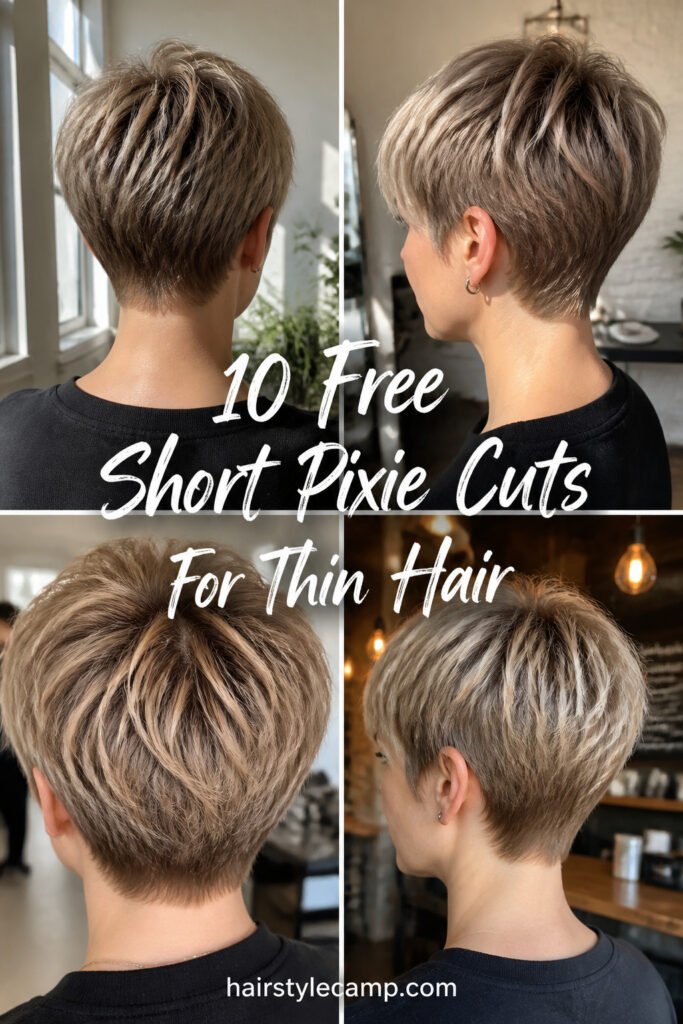
Okay friend, if your hair is fine and you think pixies will make you look like you lost all your hair, stay with me – I promise pixies can actually add so much life to thin strands. I switched to short pixie cuts for thin hair last year and it felt like a tiny wardrobe miracle that made my mornings faster and my hair look thicker.
I wrote this because I know the panic of showing your stylist a photo and asking “Can you make mine look like this?” – and then leaving unsure. I’ve tried choppy layers, tapered napes, and soft wispy bangs so I can tell you what works for fine hair and what just looks flat.
Below you’ll find ten real short pixie ideas that suit thin hair, honest difficulty levels, and product picks so you can recreate the look without stress.
These 10 Short Pixie Cuts For Thin Hair
Soft Tapered Nape Pixie

This tapered nape pixie is perfect if you want structure without losing softness – it gives a fuller-looking crown and a neat back for easy maintenance. Suits fine straight to slightly wavy hair, and I’d call the styling difficulty easy to medium because a little texturizing paste and finger styling go a long way. Quick tip – ask your stylist for soft layers at the crown rather than blunt shaving so the hair stacks and looks thicker from behind.
Shop This Style:
Feathered Side Sweep Pixie

I love the movement in this feathered side sweep – it creates the illusion of density around the front which is ideal when your part needs some help. This style suits fine hair with a bit of natural wave and is low to medium difficulty because you’ll likely use a round brush or small barrel iron to shape the sweep. Pro styling trick – lift the roots when blow drying with a small round brush and finish with a lightweight hairspray to hold shape without flattening.
Shop This Style:
Cropped Choppy Pixie

This cropped choppy pixie gives instant texture – the close-up shows how staggered layering creates depth with thin strands. It works best on fine to medium hair and is medium difficulty since you’ll be texturizing with product rather than relying on length. My go-to is a light sea salt spray for prep, then a pea-sized texturizer to separate pieces and add grip, which makes styling quick every morning.
Shop This Style:
Asymmetrical Pixie Edge

Asymmetry gives personality and the illusion of thickness where you want it most – longer pieces on one side distract from fine roots. This suits straight to slightly wavy fine hair and the difficulty is medium because clean blending on the shorter side is key. Tip – show your stylist the exact angle you want and keep the longer side long enough to tuck behind the ear when you need extra polish.
Shop This Style:
Pixie with Soft Blunt Bangs

Soft blunt bangs on a pixie balance volume and frame the face while still keeping the look light for thin hair types. This fits fine, straight hair best and is medium difficulty because you’ll need to trim bangs more often to keep them sitting right. Quick styling tip – blow-dry bangs forward using a small round brush, then set with a dab of lightweight pomade to avoid stickiness.
Textured Crown Volume Pixie

This one focuses on crown texture to create lift where fine hair often lies flat – messy, lived-in pieces can fake density beautifully. It’s ideal for fine to thin hair and I’d rate it easy to medium because you mostly need product and a little backcombing. My personal favorite trick is to apply a root-lifting spray to towel-dried hair then blast the crown with the dryer upside down for instant volume.
Shop This Style:
Short Pixie with Slight Undercut

I tried a subtle undercut and it changed how my hair sat – it removes weight at the nape so the top layers sit higher and look fuller. This suits thin straight hair best and styling difficulty is medium because the shaved area needs to be kept tidy. If you’re nervous, begin with a very subtle taper and see how the shape supports your crown before committing deeper.
Shop This Style:
Soft Layered Pixie with Highlights

Subtle highlights and soft layers can trick the eye into seeing dimension – this look is all about contrast and movement. It works on fine hair that can handle a little lightening and styling difficulty is medium since color maintenance is involved. A personal note – adding just a few face-framing babylights took my pixie from flat to lively without heavy upkeep.
Shop This Style:
Wispy Angled Pixie

The wispy angled pixie gives a chic silhouette and those feathered ends soften the shape for a pretty finish that still reads modern. Fine hair benefits because the wisps reduce bulk at the ends and create the look of layered fullness – difficulty is easy to medium depending on how polished you want it. Try a tiny amount of shine spray on ends only to keep them defined without weighing hair down.
Shop This Style:
Short Pixie with Messy Texture

This messy textured pixie is my go-to when I want something undone and flattering – it hides that my hair is fine while feeling carefree. It works on all thin hair types because the mess creates optical thickness and is easy in terms of styling – dry shampoo and a finger comb are often enough. I’ll be honest – some mornings I literally shake dry shampoo in, scrunch, and I’m out the door; it’s that forgiving.
Shop This Style:
How to Actually Make This Work For You
Don’t over-layer tiny pieces at the crown or your fine hair can look stringy – ask for strategic layers that stack rather than thin everything out. Use lightweight products that add texture and lift, not heavy creams, and experiment with root-lifting sprays and a little powder at the roots instead of piling on conditioner. Finally, book a quick trim every six to eight weeks to keep the shape sharp and the ends from getting wispy and limp.
Which short pixie is best for very thin, baby-fine hair?
For very thin hair, go for styles that create shape at the crown like tapered napes and stacked layers; cropped styles with a bit of length on top help add the illusion of volume. Keep products light and avoid heavy conditioners near the roots.
What tool or product should I buy first to style a pixie?
Start with a good heat protectant and a small flat iron or 1 inch curling iron depending on the texture you want, plus a matte texturizing paste for separation. Investing in a quality root-lifting spray is a game changer for fine hair.
How can I save time styling in the morning?
Use dry shampoo the night before to add texture and a root-lift spray before blow-drying, then shape with fingers instead of brushes to keep it quick. I often sleep with slightly damp hair and wake up, tousle, and go – that saves me ten minutes daily.
Is it a mistake to add lots of layers to thin hair?
Too many short, thin layers can actually make hair look thinner if not placed strategically, so tell your stylist you want stacking or graduated layers for lift. A stylist who understands fine hair will remove weight in the right spots and leave enough length to create optical density.