Okay bestie, if you have fine hair and are over 60, pixie cuts can feel like a magic trick – they add lift, look chic, and make mornings so much easier. I remember staring at a stack of salon photos feeling overwhelmed, then loving how a short cut suddenly made my whole face glow.
I put this together because I wanted options that actually work for thinning, fragile hair – not just trendy pictures that are impossible to copy. I’ve cut my own hair shorter a few times and watched my mom try a pixie and fall in love with how light and bouncy it felt after a week.
Read on and I’ll walk you through 15 realistic pixie ideas, which hair types they suit, and the exact little tricks to get the look at home or in the salon.
These 15 Pixie Cuts For Women Over 60 With Fine Hair
Feathered Short Pixie

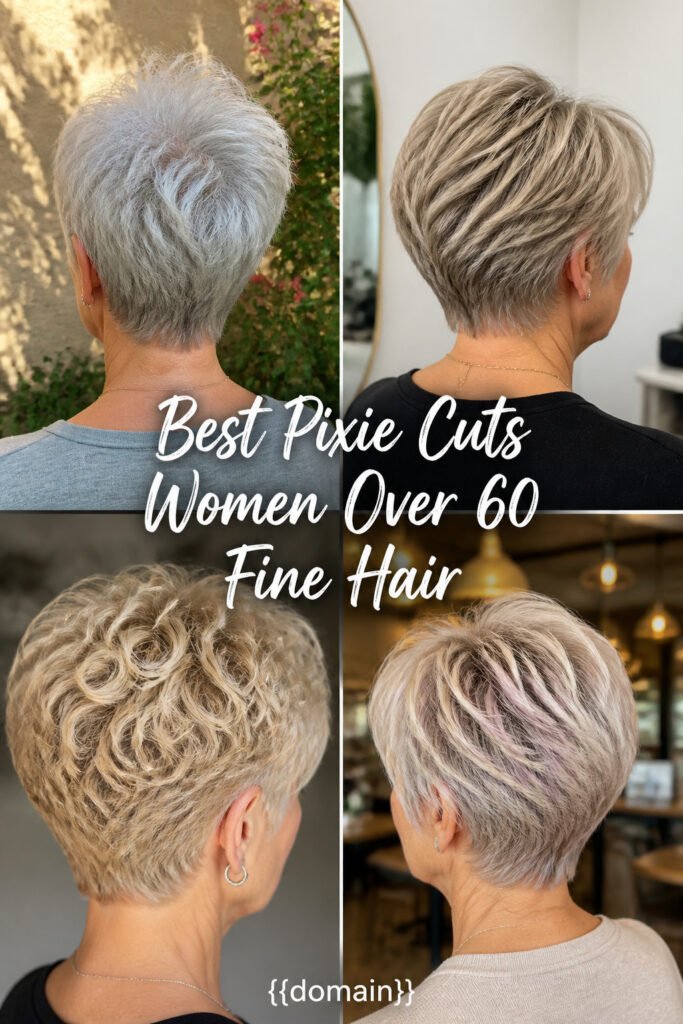
This feathered short pixie gives lightweight volume at the crown which is perfect for fine hair that needs lift. It’s a low to medium difficulty cut for stylists who can razor-texture the ends lightly – ask for feathered layers rather than blunt chopping. A styling trick I love is using a root-lifting spray on damp hair and blow-drying with a small round brush to coax the natural movement.
Shop This Style:
Soft Tapered Pixie

This soft tapered pixie is slightly longer on top with cropped sides to create contrast and the illusion of thicker hair. It suits straight or slightly wavy fine hair best because the tapered sides frame the head and prevent limpness. Quick tip – use a light mousse at the roots and rough-dry while lifting the crown with your fingers for effortless texture.
Shop This Style:
Curly Pixie Crop

For natural curls or soft perm waves, a cropped curly pixie gives body without weighing hair down. This one is ideal for fine curly hair where reducing length at the nape and adding defined curls at the top creates a full shape. I recommend a curl cream and diffuser – scrunch while diffusing to encourage curl memory and avoid frizz.
Shop This Style:
Chic Pixie Bob

The chic pixie bob blends a longer fringe with a tapered nape so it feels feminine and still light. It’s a great option if you want the pixie energy but prefer some face-framing length. Try blow-drying inward with a medium round brush for natural-looking bend, and finish with a shine serum sparingly at ends.
Shop This Style:
Bixie Texture Cut

The bixie – a pixie/bob hybrid – uses choppy layers to fake density and movement, perfect for fine, flat hair. It’s slightly edgier and works well with a sea salt spray to add gritty texture. When my hair was over-processed years ago I loved how a bixie brought life back by removing weight and creating natural lift.
Shop This Style:
Wispy Fringe Pixie

A wispy fringe softens features and keeps the pixie from looking severe, which is why I recommend it for anyone wanting a gentle update. Fine hair responds well to airy bangs because they don’t pull the whole style down. A quick tip is to dust a bit of dry shampoo at the roots of the fringe to keep it from clinging to the forehead.
Shop This Style:
Swept-Back Pixie

This swept-back pixie looks polished and keeps hair away from the face, highlighting bone structure in a flattering way. It’s best for fine hair that can hold a little shape with styling paste or cream. My stylist suggested a faint pomade at the roots, then a soft blow-dry backwards – it lasts well into an evening event without stiffness.
Shop This Style:
Pastel Pixie Accent

A pastel accent on a pixie can distract from thinning and add a playful edge without heavy dyeing across the whole head. Choose a semi-permanent shade at the crown or tips to keep maintenance low. If you love color but worry about damage, I suggest a conditioning color gloss and a weekly protein mask to keep strands strong.
Shop This Style:
Smoky Textured Shag Pixie

The textured smoky shag brings piecey layers and a lived-in look that works wonders on fine hair to imply density. It’s slightly higher maintenance at the cut level but styling is forgiving – scrunch and shape with fingers and a bit of sea spray. When I was experimenting with layers I found shaggy pieces made my fine hair read fuller faster than one-length cuts.
Shop This Style:
Classic Short Pixie

The classic short pixie is timeless and easy to maintain, cutting down washing and styling time considerably. Fine hair benefits because the shorter length removes the weight that flattens roots. Try a matte paste to separate the top layers for a modern finish that still reads soft.
Shop This Style:
Long Pixie With Layers

A long pixie keeps length around the front and crown, giving you styling options like tucking behind an ear or sweeping to the side. Fine hair that still wants some versatility will like this because it isn’t as committed as a cropped pixie. Use a lightweight styling cream and a quick blast of heat for a lived-in polished look.
Shop This Style:
Grown-Out Pixie Bob

If you’re easing into short hair, the grown-out pixie bob hits the sweet spot with easy transition length and soft layering. Fine hair looks fuller when the ends graze the jaw or cheek because the silhouette appears thicker. Keep trims every six to eight weeks to maintain the shape without losing the grown-out vibe.
Shop This Style:
Side-Parted Soft Pixie

A deep side part instantly creates the appearance of volume on fine hair and gives a classic, flattering line. This style is so simple – swap the part for lift and finish with a touch of powder at the roots. My aunt loved this trick when she wanted to hide a thinning crown without cutting too short.
Shop This Style:
Layered Pixie With Nape Taper

This version uses short layers at the crown and a soft nape taper to lift hair and create a neat silhouette. Fine hair especially benefits because removing bulk at the back lets the crown sit higher. Ask your stylist for feathered layering and keep a lightweight serum on hand to smooth any flyaways.
Shop This Style:
Piecey Textured Pixie

Chunky, piecey layers disguised as texture give an instant density effect on very fine hair without adding weight. This look is casual and forgiving – you can scrunch product in and let it air dry for a lived-in finish. If you want structure for a night out, a tiny bit of wax separated through the ends does wonders.
Shop This Style:
How to Actually Make This Work For You
Start by being honest about your hair density, growth patterns, and how much time you want to spend styling each morning – bring photos and ask your stylist to tailor layering to those specifics. Use lightweight products that build texture without weighing hair down and commit to short, regular trims so the shape doesn’t collapse. Finally, experiment with part placement and small tools like a diffuser or medium barrel iron to discover the few tricks that make your pixie feel effortless every day.
How do I know which pixie suits my hair type?
Look at your natural texture and how your hair behaves – if it’s straight and fine, go for feathered layers or a bixie; if you have natural waves or curls, a cropped curly pixie will hold shape better. Discuss density with your stylist so they can add volume where needed without thinning too much.
What tools and product should I keep on hand?
A small round brush or diffuser, a lightweight mousse or texturizing spray, and a heat protectant are the essentials I recommend for most pixies. Add a light finishing paste or serum depending on whether you want matte texture or subtle shine.
Can a pixie really save time in the morning?
Yes – simpler shapes like classic pixies or tapered styles often need only finger styling and a quick blast of heat to look finished, cutting your routine to five minutes. Styles with longer faces or fringes need a bit more shaping but still beat longer hair for daily upkeep.
What’s a common mistake people make with short cuts?
Over-thinning the crown or asking for too-short bangs can flatten fine hair and make styling harder, so request strategic layering and keep some length at the top if you need versatility. Trust your stylist to create fullness rather than remove weight indiscriminately.